
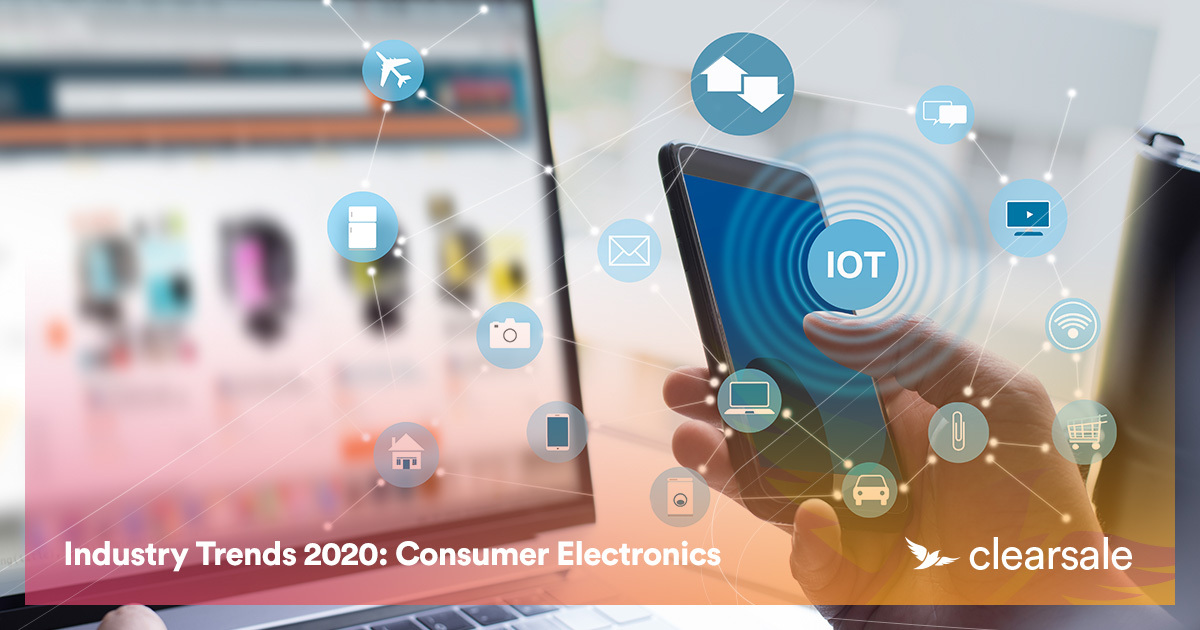
Three trends shaped the consumer electronics e-commerce market in 2020: smarter IoT connectivity that opened maintenance and subscription revenue, COVID-19 supply chain shortages that delayed product launches, and rising sales that brought greater exposure to e-commerce fraud. With segment revenue projected to top $365 billion in 2020, electronics retailers faced a parallel rise in fraud attacks, since fraudsters target high-volume periods and times of instability. ClearSale recommends pairing machine learning and AI with experienced manual fraud reviewers to protect that growth.
When it comes to rapid change, few industries match consumer electronics. Stalwarts like Sony, Apple, and LG have seen, ridden, and in some cases driven the multiple waves of change that have washed through the industry over the decades.
The question is, what’s next? What trends – good and bad – will the consumer electronics industry face in the latter half of this year?
Trend #1: Better IoT, Better Maintenance, Better Insights
Connectivity will continue to be key in 2020 and beyond, with market leaders finding new and exciting ways to turn this technology into revenue opportunities. A recent Market Research Future report reveals that there is considerable growth in the ability for devices to cross-function with other devices, creating a whole-home system that reduces human workload.
Many companies have realized the potential when it comes to maintenance, as IoT-enabled devices can be monitored for malfunction, needed maintenance, or low supplies. This provides an excellent opportunity for companies to promote subscription-based maintenance or supply replenishment services, so consumers can enjoy knowing that they will have a greatly reduced amount of downtime. For example, a work-from-home professional who owns a home printer (but who lives nowhere near an office supply store) will likely appreciate the opportunity to auto-order toner when their supplies run low.
In addition to additional revenue, IoT devices give consumer electronics companies valuable insight on how, when, and why their products are being used. Instead of relying on customer feedback, which can provide uneven results, using IoT data is akin to being a fly on the wall while consumers use the products. This data can help manufacturers improve (or scuttle) features that are rarely used while continuing to design toward the user experience.
A similar amount of insight can even be gained within brick-and-mortar retail locations. While it’s relatively easy to track consumer behavior online, doing so in-store has been a bit more challenging. IoT-enabled beacons and geofences are increasingly popular with retailers, allowing them to better understand customer movement and browsing patterns.
Trend #2: Supply Chain Issues
In May, E-Commerce Times revealed that the COVID-19 pandemic is causing widespread supply chain shortages within the electronics industry.
As a result, large numbers of product launches have been delayed – some indefinitely. This has caused many businesses to scramble for replacement sources for vital components. In their haste, however, these companies may be facing higher costs, as well as the increased risk associated with a truncated vendor qualification process.
A recent Electronic Components Industry Association (ECIA) survey, however, indicated renewing optimism among supply chain participants. Dale Ford, chief analyst with ECIA explains, “The survey presents a picture of renewed optimism as concern about impact on the supply chain and extended lead times fell significantly for all major component categories – passives, electro-mechanical and semiconductors. This survey saw concerns about nearly every stage of the supply chain, including end-market demand, reduce substantially.”
An expected trend for the remainder of 2020 is a volatile supply chain, with spikes in coronavirus infections (such as we have seen in the past couple of weeks) putting increased pressure on US-based manufacturing and fulfillment. While China appears to be relatively stable, Japan and South Korea are currently experiencing second waves of the virus, which could stifle production.
Fortunately, it helps that the consumer electronics industry is no slouch when it comes to innovation. Leaders in this market are expected to encourage procurement and engineering teams to work together to come up with creative new ways to ensure that the components in the design are ones that can be readily obtained.
Trend #3: Increased Revenue…and Increased Exposure to Fraud
Revenue in the consumer electronics segment is expected to reach over $365 billion in 2020, and over $450 billion by 2024. This is bolstered by ever-growing user penetration rates, which are anticipated to reach over 32% by 2024.
In short, consumer electronics have completely enmeshed themselves in everyday lives. No longer considered “expensive toys,” consumer electronic products have become widely accessible and completely ubiquitous.
That’s the good news. The bad news is that this increase in volume is expected to be accompanied by an increase in e-commerce fraud.
Typically, as sales activity rises, so do attacks, with fraudsters selecting times of high sales volume to increase the odds of their attack slipping under the radar. Additionally, times of instability and downturn tend to precipitate an increase in fraud, as people have an increased motive and opportunity to defraud businesses.
Currently, we are experiencing both scenarios.
Add to this a vast swath of brick-and-mortar retailers who have been scrambling to establish an e-commerce presence during the pandemic…and who may be very new to the idea of preventing e-commerce fraud, and you have a perfect storm.
The consumer electronics industry, like many others, is experiencing a certain amount of volatility, and even the most expert projections may be stymied by the unpredictability of today’s market forces. Fortunately, this industry does show promise of excellent growth in 2020 and beyond. To maintain that growth and prevent fraud, electronics e-commerce retailers should seek out a fraud prevention solution that combines new trends (machine learning and AI) with ageless expertise (industry-leading manual fraud reviewers). Talk to ClearSale today to learn more about how we can help your business make the most of 2020’s trends, challenges, and opportunities.
Frequently Asked Questions
What were the main consumer electronics industry trends in 2020?
The three main trends were better IoT connectivity that created new maintenance and subscription revenue opportunities, COVID-19 driven supply chain shortages that delayed product launches, and rising revenue paired with increased exposure to e-commerce fraud. Together these reshaped how electronics retailers operated and protected their sales.
How does IoT create new revenue opportunities for consumer electronics companies?
IoT-enabled devices can be monitored for malfunction, needed maintenance, or low supplies, which lets companies offer subscription-based maintenance or supply replenishment services. For example, a home printer can auto-order toner when supplies run low. The same connected devices also give manufacturers direct insight into how, when, and why their products are used.
How did COVID-19 affect the consumer electronics supply chain in 2020?
The pandemic caused widespread supply chain shortages in the electronics industry, delaying many product launches, some indefinitely. Companies scrambled for replacement component sources, which raised costs and added risk from shortened vendor qualification. An ECIA survey later pointed to renewing optimism as concerns about lead times and component supply fell across passives, electro-mechanical, and semiconductors.
Why does e-commerce fraud increase when consumer electronics sales rise?
Fraud attacks typically rise with sales activity because fraudsters target high-volume periods to slip attacks under the radar. Times of instability and economic downturn also raise both motive and opportunity to defraud businesses. In 2020 both conditions occurred at once, increasing the risk for electronics retailers.
How large was the consumer electronics market expected to be?
Revenue in the consumer electronics segment was expected to reach over $365 billion in 2020 and over $450 billion by 2024. Growth was bolstered by rising user penetration rates, anticipated to exceed 32% by 2024, as electronics shifted from expensive toys to ubiquitous everyday products.
How can electronics e-commerce retailers prevent fraud while growing?
Electronics retailers should choose a fraud prevention solution that combines newer technology like machine learning and AI with experienced, industry-leading manual fraud reviewers. This blend protects revenue growth while reducing false declines and missed fraud. ClearSale offers this combined approach to help electronics merchants manage the trends, challenges, and opportunities of the market.
Stop fraud before it costs you
ClearSale's AI-powered fraud prevention reviews every order and backs it with a chargeback guarantee, so you approve more good orders and fight fewer disputes.


.jpg)