
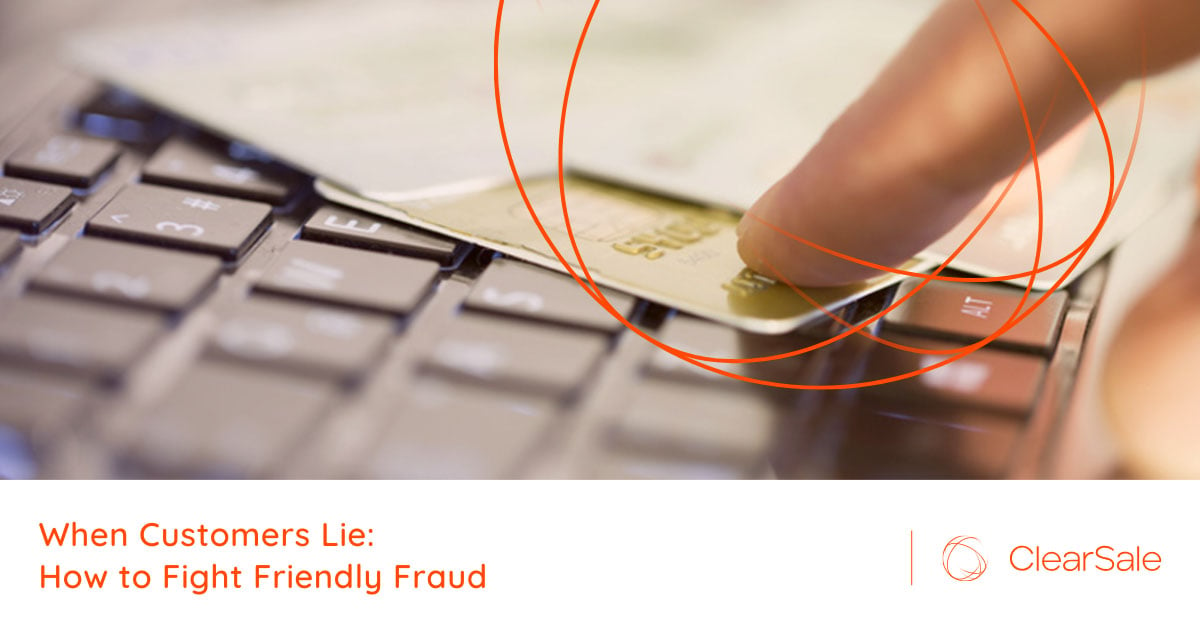
Friendly fraud is when a customer files a chargeback on a purchase they legitimately received instead of requesting a return, and in 2025 it made up 61% of all ecommerce disputes and cost merchants over $100 billion. The LexisNexis True Cost of Fraud Study 2025 puts the total damage at $4.61 for every $1 of fraud loss once chargebacks, fees, and replacement merchandise are counted. Merchants prevent it by combining clear communication (order confirmations, return policies, delivery signatures) with a fraud solution that disputes chargebacks end to end, since unchecked friendly fraud can push the chargeback rate past the 1% threshold into high-risk status and higher fees.
TL;DR: Friendly fraud happens when a customer files a chargeback on a legitimate purchase instead of requesting a return. In 2025 it accounted for 61% of all disputes and cost merchants over $100 billion. Merchants fight it with a combination of clear communication (order confirmations, return policies, delivery signatures) and a fraud prevention solution that handles chargeback disputes end to end. Left unchecked, friendly fraud pushes a merchant's chargeback rate past the 1% threshold, triggering high-risk status and higher processing fees.
Friendly fraud happens when a customer files a chargeback on a purchase they legitimately received, and in 2025 it accounted for 61% of all ecommerce disputes, costing merchants over $100 billion. The chargeback process itself is not the problem; the problem is customers using it as a shortcut to a free return. Understanding why it happens is the first step to stopping it.
How Does Friendly Fraud Happen?
Friendly fraud happens when a customer places a legitimate order, receives the merchandise, and then files a dispute with their bank or credit card issuer with the intention of receiving a refund – either honestly or in bad faith. It can take place in a variety of ways, including when the customer:
- Places an order with the explicit intent to get free products
- Experiences buyer’s remorse and regrets a high-priced purchase
- Hides a purchase from a spouse or joint account holder
- Forgets to cancel a recurring purchase
- Misses the window to return a product
- Tries to lower their credit card balance
Are there legitimate reasons for filing a dispute? Absolutely.
When the customer honestly never receives their order or their order isn’t canceled as requested, and they try to resolve an issue with the business to no avail, it’s reasonable to start the chargeback process.
What Are Chargebacks?
When customers file a dispute with their credit card company, it initiates a process where the card issuer investigates whether the customer should be refunded their money. If the issuer decides in favor of the customer, the card issuer will instruct the seller to refund the customer. Then the issuer will charge the seller an extra fee, which is referred to as a chargeback. According to the LexisNexis True Cost of Fraud Study 2025, every $1 of fraud loss translates to $4.61 in total cost for U.S. ecommerce and retail merchants once chargebacks, fees and merchandise replacement are factored in.
Chargebacks were initially created by card issuers to protect consumers. In fact, the chargeback process can help issuers fight fraud by empowering customers to point out transactions they didn’t make and recoup their money. It also puts the onus on e-commerce businesses to implement fraud prevention tactics – something customers have come to expect. In fact, our original research, “State of Consumer Attitudes on Ecommerce, Fraud & CX 2023-2024,” has shown that 90% of consumers prioritize fraud prevention over an easy checkout experience.
However, because the chargeback process has become so easy to navigate, both fraudsters and everyday consumers have come to see chargebacks as a shortcut to profit. Thieves can easily game the system by filing fraudulent chargebacks, and consumers can avoid the embarrassment and hassle related to returns.

How Friendly Fraud Impacts Businesses and Other Ecommerce Stakeholders
Friendly fraud is a growing ecommerce issue. In 2025, it accounted for 61% of disputes, costing merchants over $100 billion. This rise in friendly fraud translates to more costly chargebacks, which hits businesses hard — especially small businesses that don’t have the time, money or personnel to defend themselves against fraudulent claims.
Ecommerce businesses are the biggest losers to friendly fraud
Businesses take on most of the costs related to friendly fraud and chargebacks. With every friendly fraud incident, businesses can lose:
- The products or services sold when a customer fraudulently disputes a legitimate transaction
- The fulfillment costs associated with processing and completing the order
- The packaging and shipping costs
- The expensive chargeback fees
- The resources dedicated to researching, collecting evidence and disputing the resulting chargebacks
Friendly fraud also puts customer loyalty in jeopardy – at least from the business owner’s perspective. Too often, online businesses find themselves trapped between fighting friendly fraud and losing customers. Businesses may know that some of their longstanding customers aren’t being honest when disputing purchases but don’t want to risk the negative social media response and loss if they push back. However, ignoring friendly fraud can actually create an environment for more bad behavior.
Friendly fraud can lead to “high-risk” status
Another potential issue arises if ecommerce businesses let friendly fraud slide as a “cost of doing business.” They may find their businesses labeled as “high-risk” by credit card issuers. Once businesses cross the chargeback threshold — typically 1% — they will likely be subject to chargeback monitoring programs and higher fees reserved for companies that present a greater financial risk to card issuers.
If an ecommerce company has been put in the “high-risk” category, it’s an uphill battle to be reclassified. For some businesses, it can be the beginning of the end.
How ecommerce businesses overreact to friendly fraud
So, what do companies do to avoid the slippery slope toward “high-risk” status? Implement draconian fraud prevention tactics, of course.
From strict fraud filters to automated systems that decline any order that looks like it could be fraudulent, ecommerce businesses can lull themselves into believing that they have fraud of any kind beat. But that creates an even bigger issue: false declines.
False declines or false positives happen when a customer’s valid order is declined because the business mistakes it as fraudulent. About 65% of declined orders are actually legitimate. Ecommerce businesses may be preventing fraud, including friendly fraud, but they’re more likely turning away good customers.
When valid customers are denied the ability to make a purchase, they don’t respond positively.
Our original research showed that 41% of customers will permanently take their business elsewhere after they’ve experienced a false decline, and 34% will go a step further to let their friends and followers on social media know what happened.
But businesses aren’t alone. Friendly fraud impacts banking institutions and processors as well.
Card issuers experience losses related to friendly fraud
Customer loyalty concerns definitely extend to banking institutions. Specifically, customers don’t take kindly to card issuers refusing to refund a disputed transaction amount — even when the situation is clearly a case of friendly fraud.
And because regulations require issuers to refund customers quickly, the increase in friendly fraud and subsequent chargebacks can take a bite out of the issuer’s cash flow. That’s why companies like Visa are implementing new rules to give ecommerce businesses more options when a chargeback is initiated.

How friendly fraud impacts customers
Consumers aren’t necessarily the clear winners when it comes to friendly fraud. The actions of fraudsters and other customers acting in bad faith may result in higher product prices to offset the costs associated with chargebacks. And issuers may raise their fees and interest rates to protect themselves against expected future losses.
Unfortunately, friendly fraud is difficult to prevent because it starts off as a legitimate purchase. But that shouldn’t stop businesses from recognizing friendly fraud as a serious threat and acting to minimize its effects on their business.
Steps for Preventing Friendly Fraud
Businesses can take steps to prevent friendly fraud from happening in the first place:
Foster healthy customer relationships
Make it uncomfortable for customers to commit fraud by establishing and maintaining communication with them. Personalize greetings, texts and emails to make customers feel like they’re known and appreciated. And make sure they know every possible way to reach out and get a question answered – especially if it’s a concern about a purchase. Give them every reason not to file a dispute.
Send order confirmations
When a customer makes a purchase, send out an email and/or text confirmation right away. Make sure to include purchase details, such as the amount, how the business will appear on their statement, and when they should expect to receive their product.
Explain how returns and refunds work
No business wants to assume that a purchase will be returned, but having to deal with a chargeback is much worse. Communicate how returns and refunds work throughout the shopping experience. Consider including the information as a popup box that can be activated with an ever-present link. Include an acknowledgement of return and refund policies as part of the purchase process. And, for sure, include those policies in every communication regarding the customer’s purchase.
Require signatures at delivery
Spend the extra money to require signatures for all deliveries, especially high-value orders. If a chargeback is initiated for one of those purchases, that proof of receipt will be a compelling piece of evidence to dispute and win.
Make getting in touch easy
Offer multiple ways for customers to ask questions and/or request a return/refund. This includes phone numbers, email addresses, social media pages, and chatbots. Also make sure that customer service representatives are trained to handle complaints effectively with the goal of avoiding friendly fraud and chargebacks.
Keep customers informed
From the time the order is placed to when customers receive satisfaction surveys, stay in contact. Send order updates with shipping and tracking information so customers know where their merchandise is every step of the way.
Frequently Asked Questions about Friendly Fraud
What is friendly fraud?
Friendly fraud occurs when a customer who placed a legitimate order files a chargeback with their bank instead of returning the item or contacting the merchant. It can be intentional (deliberately exploiting the dispute system) or unintentional (forgotten subscriptions, unrecognized billing descriptors). In 2025 it accounted for 61% of all ecommerce disputes.
How much does friendly fraud cost merchants?
According to the LexisNexis True Cost of Fraud Study 2025, every $1 of fraud loss translates to $4.61 in total cost for U.S. ecommerce and retail merchants once chargebacks, fees, and merchandise replacement are factored in.
What is the chargeback threshold that triggers high-risk status?
Card networks typically set the chargeback threshold at 1% of transactions. Merchants who exceed that rate are placed in chargeback monitoring programs and charged higher processing fees. Sustained violations can result in account termination.
What are the most effective steps to prevent friendly fraud?
The eight core steps are: (1) build personal customer relationships so disputes feel uncomfortable, (2) send immediate order confirmations with billing descriptor and delivery estimate, (3) communicate return and refund policies at every touchpoint, (4) require delivery signatures on high-value orders, (5) make customer support easy to reach via multiple channels, (6) keep customers informed with tracking updates, (7) implement a fraud prevention solution with machine learning and human review, and (8) use end-to-end chargeback management to dispute fraudulent claims.
What is the difference between friendly fraud and a legitimate chargeback?
A legitimate chargeback is filed when a customer never received an order, was charged for a cancellation that did not process, or cannot resolve the issue directly with the merchant. Friendly fraud is a dispute filed on a completed, correctly fulfilled transaction: the customer received the goods but disputes the charge anyway.
Can fighting friendly fraud hurt legitimate customers?
Yes. Overly aggressive fraud filters cause false declines, where valid orders are rejected as suspicious. Research shows 65% of declined orders are legitimate, and 41% of customers who experience a false decline will permanently take their business elsewhere.
How does requiring a delivery signature help fight friendly fraud?
A signed proof of delivery is direct evidence that the customer received the order. When a chargeback is filed on that transaction, the merchant can submit the signature record to the card issuer to dispute and win the claim. It is most cost-effective on high-value orders where the chargeback exposure outweighs the signature fee.
What role does a fraud prevention solution play in fighting friendly fraud?
A fraud prevention solution combines machine learning to flag suspicious patterns with human analysts who review edge cases. It also manages the chargeback dispute process end to end, gathering evidence, filing responses, and tracking outcomes, which is the defense layer merchants need once a dispute has already been filed.
Implement a Robust Fraud Prevention Solution
Even businesses that implement these solutions may still find themselves the victim of friendly fraud. That’s where a comprehensive fraud prevention solution can protect them against the rising threat of friendly and other types of fraud.
ClearSale’s hybrid approach to fraud prevention combines advanced machine learning and human analysis to address the friendly fraud threat in real time. In addition, we offer end-to-end chargeback management options based on your unique business needs.
Not only can we help protect your business over the long term, but we also guarantee transactions 100% against fraudulent chargebacks. Contact a ClearSale analyst today to learn more.
Stop fraud before it costs you
ClearSale's AI-powered fraud prevention reviews every order and backs it with a chargeback guarantee, so you approve more good orders and fight fewer disputes.

.jpg)